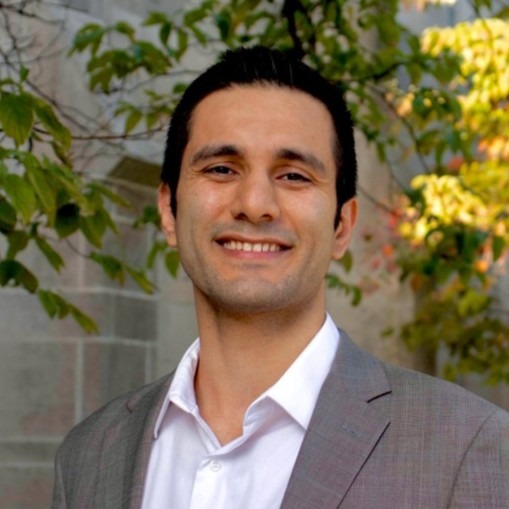
Reza Alipour
Data Scientist at Meta · Computational Biologist & Pharmacologist
I am a Data Scientist at Meta and Computational Biologist based in the San Francisco Bay Area. My background bridges clinical pharmacology (Doctor of Pharmacy / PharmD) and computational neuroscience (Ph.D. in Neuroscience, Indiana University Bloomington).
At Meta, I design and scale machine learning systems and revenue targeting infrastructure supporting hundreds of thousands of active advertisers.
In my independent and academic research, I work at the intersection of machine learning, cheminformatics, and pharmacology—focusing on target discovery, autophagy kinetics, multimodal clinical AI (e.g., AutoRadAI), and high-throughput biological data.
Professional Experience
- Engineered large-scale ML systems optimizing targeting infrastructure across Meta's revenue engines.
- Designed statistical models supporting 100,000+ active advertisers, driving measurable gains in precision targeting.
- Directed cross-functional technical initiatives to scale backend infrastructure and define rigorous evaluation metrics.
- Analyzed 30,000+ experimental sensor datasets to drive core hardware and interaction architecture decisions.
- Developed machine learning models for high-dimensional sensor topologies, driving a 150% capacity expansion.
- Designed and executed multimodal biological and electrophysiological studies across 600+ subjects.
- Applied deep learning architectures and complex network analysis to decode neural dynamics of place cells and time cells.
- Conducted research across optogenetics, multi-electrode array (MEA) recording, connectomics, and computational modeling.
- Analyzed performance datasets covering 20,000+ deep-tech and biotechnology startups.
- Conducted technical due diligence and ML architecture assessments for high-conviction AI and computational biology platforms.
Selected Research & Engineering
GitHub Profile →Autophagy Modulator Screening & Transcriptome Benchmark
Systematic benchmarking study comparing structure-to-transcriptome regression against binary QSAR classifiers across 471k LINCS L1000 signatures, HAMDB labels, and 99k ChEMBL molecules. Demonstrates why simple Morgan fingerprints outperform complex embeddings and enriches 9× for true autophagy actives.
AutoRadAI: Multimodal Prostate Cancer ECE Detection
End-to-end ensemble AI framework fusing multi-parametric MRI, digital histopathology, and clinical data (1,001 patients) to predict extracapsular extension (ECE) in prostate cancer. Surpassed radiologist baselines in real-world clinical evaluation. Patented system (IR 82494).
Dr. Fred: Evidence-Based CBT Mental Health Companion
Virtual cognitive health companion applying large language model reasoning grounded in verified Cognitive Behavioral Therapy protocols. Replaces rigid decision trees with adaptive psychotherapeutic strategies.
AutoDash: Automated Multi-Dimensional Analytics
Automated web application designed for ingestion, parsing, dynamic statistical modeling, and interactive visualization of complex multi-sensor and experimental datasets.
Education
Granted Patents
Formulations and delivery frameworks translating cellular and molecular pharmacology findings into targeted therapeutic interventions and clinical oncology decision support.
Latest Writing
All Writing →Structure-Based Prediction of Autophagy Modulators: From Transcriptome Collapse to Binary Classifiers
An honest experimental autopsy evaluating structure-to-transcriptome regression on the LINCS L1000 dataset. Details the failure modes of learned embeddings on biological controls, how generic stress signals confound signature matching, and why binary Morgan fingerprint classifiers establish a reproducible 0.858 AUROC baseline.